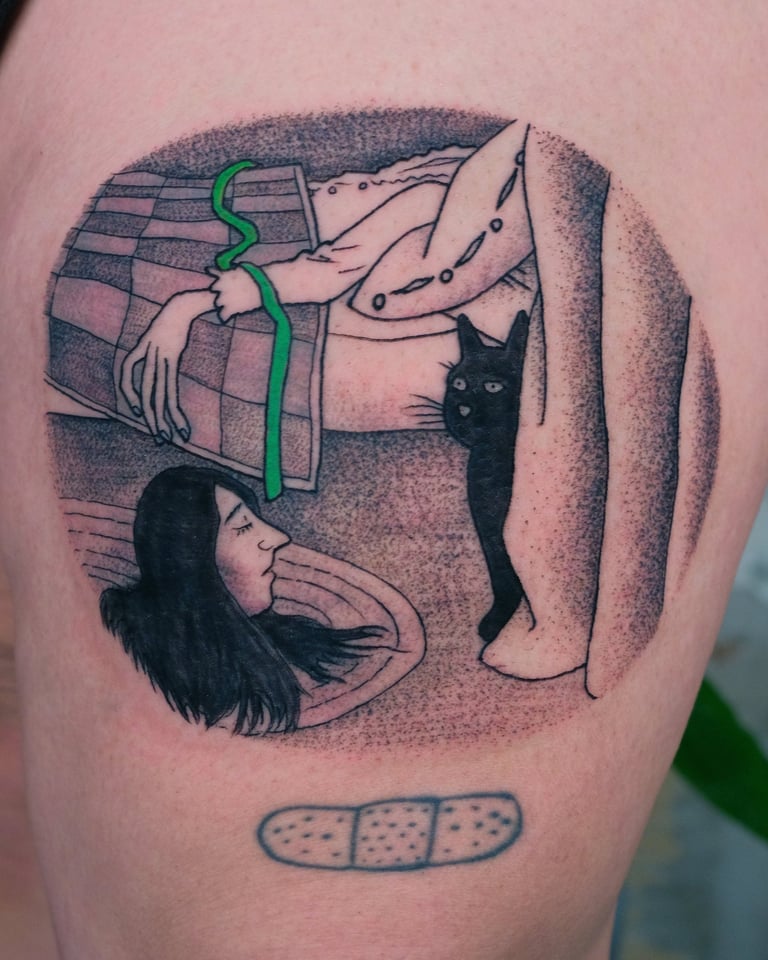
What are engraving style tattoos?
Am I the artist for you?
Do you:
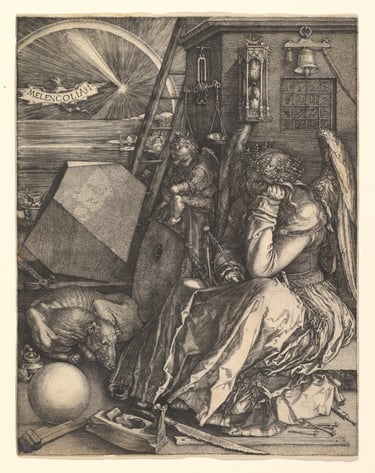
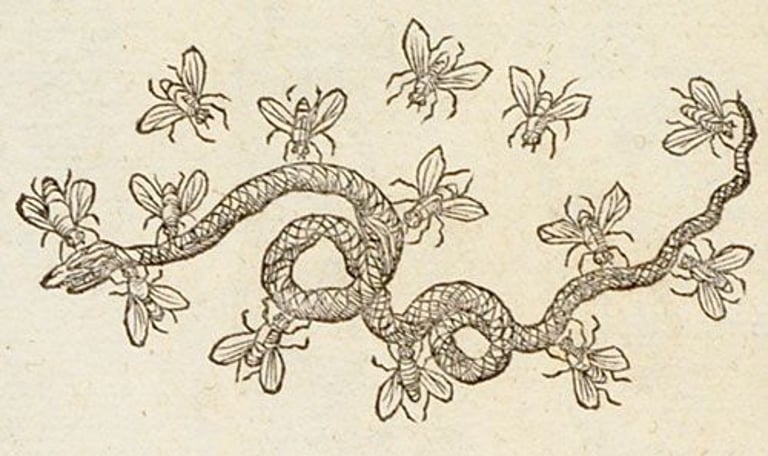
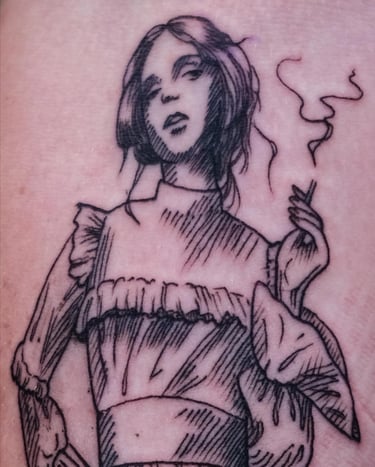
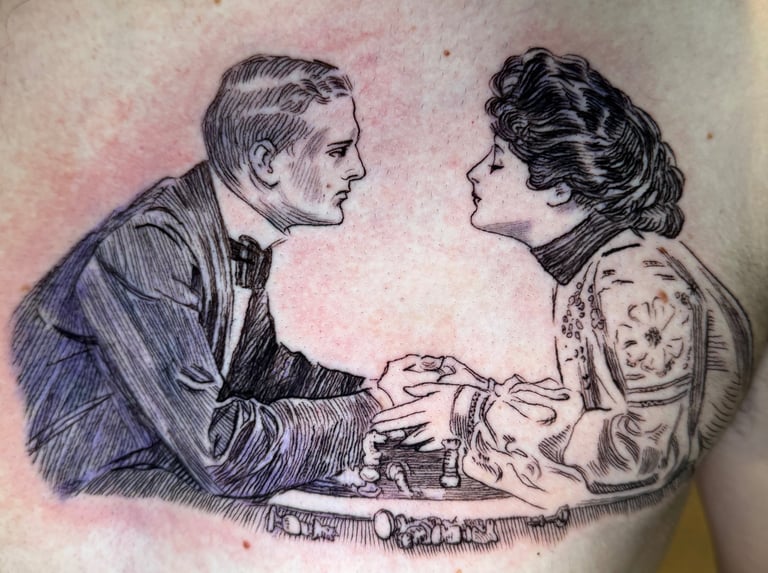
Here's the funny thing: all tattooing is technically engraving. You're cutting into skin with a needle and depositing ink. But when people in the tattoo world say "engraving style," they're talking about something specific. Tattoos that look like they were pulled from the pages of a very old book.
I've also seen it called etching style, woodcut style, or printmaking-inspired tattooing. If you've ever seen a tattoo that looks like it belongs in a medieval manuscript, a vintage anatomy textbook, or an antique botanical illustration, that's what we're talking about.
Where the style comes from
Before photography, before digital printing, if you wanted to reproduce an image, you carved it. Into wood. Into metal. Into stone. An artist would cut a design into a block of wood (woodcut) or scratch it into a metal plate with a sharp tool (engraving or etching), ink the surface, and press it onto paper. Every book illustration, every newspaper image, every scientific diagram was made this way for centuries.
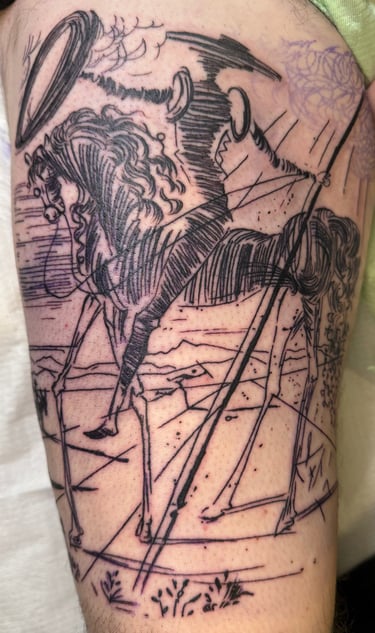
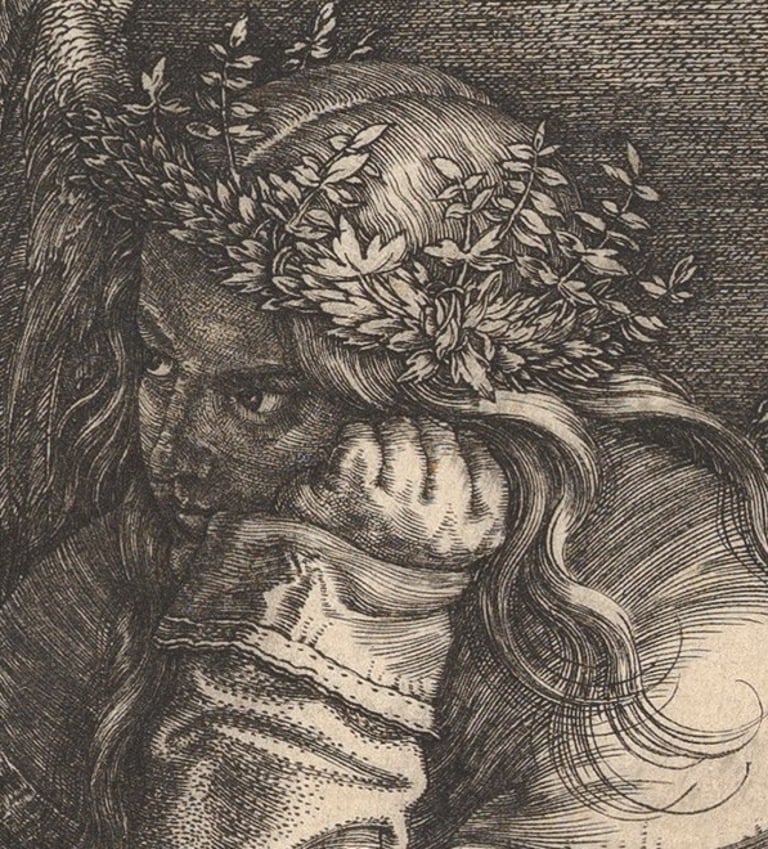
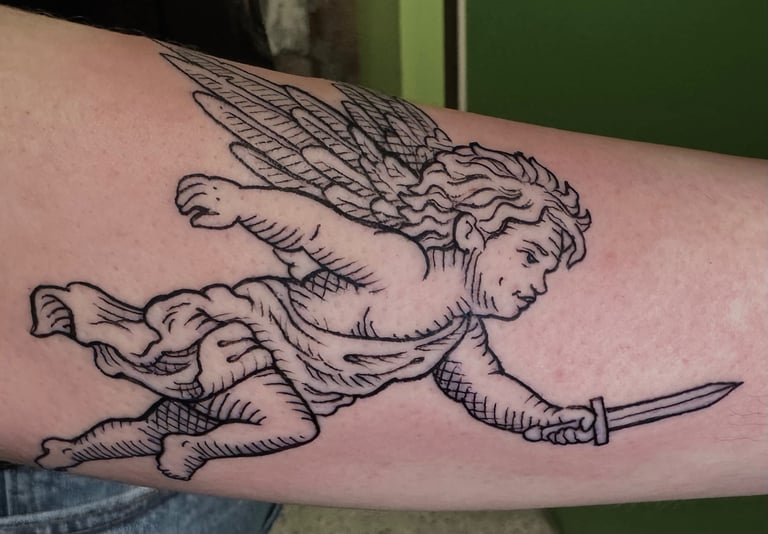
These prints have a look that's instantly recognizable: fine parallel lines creating shading and depth, cross-hatching for darker areas, the natural texture of a hand-carved surface. There's an imperfection to it that feels alive. The slight unevenness of a hand-cut line, the way the ink sits differently where the pressure varied.
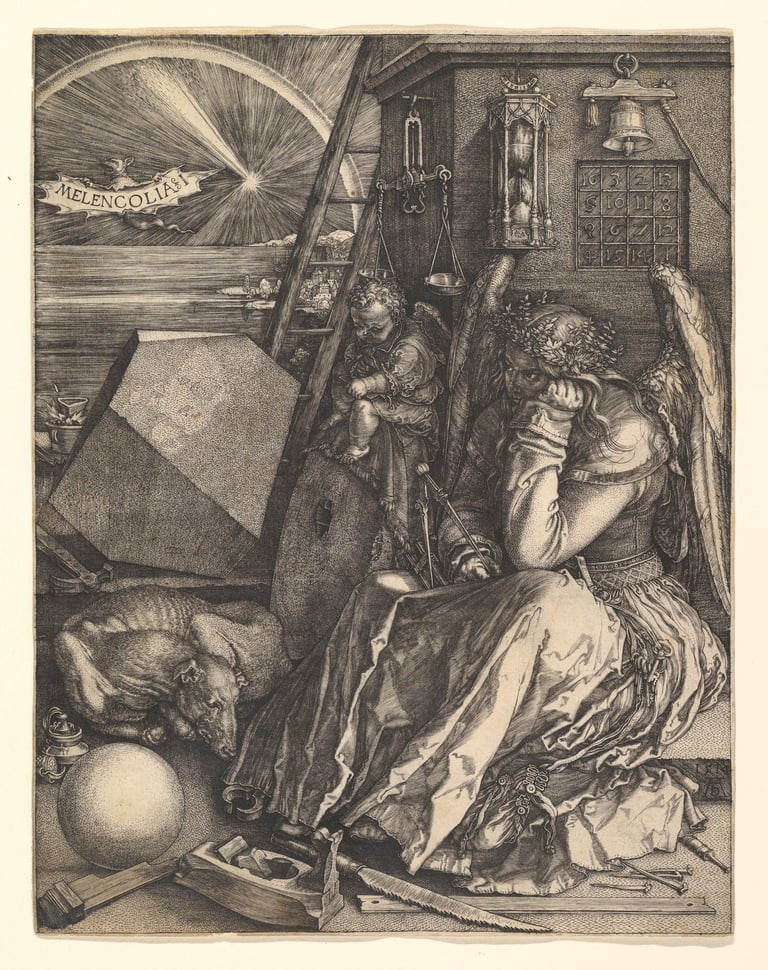
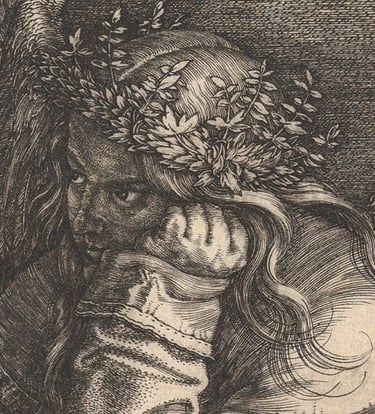
The artists who made this work, people like Albrecht Dürer and Gustave Doré, along with the anonymous illustrators of medieval bestiaries and herbals, were creating some of the most detailed, beautiful black ink artwork in human history. Engraving style tattooing takes that same visual language and puts it in skin.
What is it, and what makes it different from other tattoo styles?
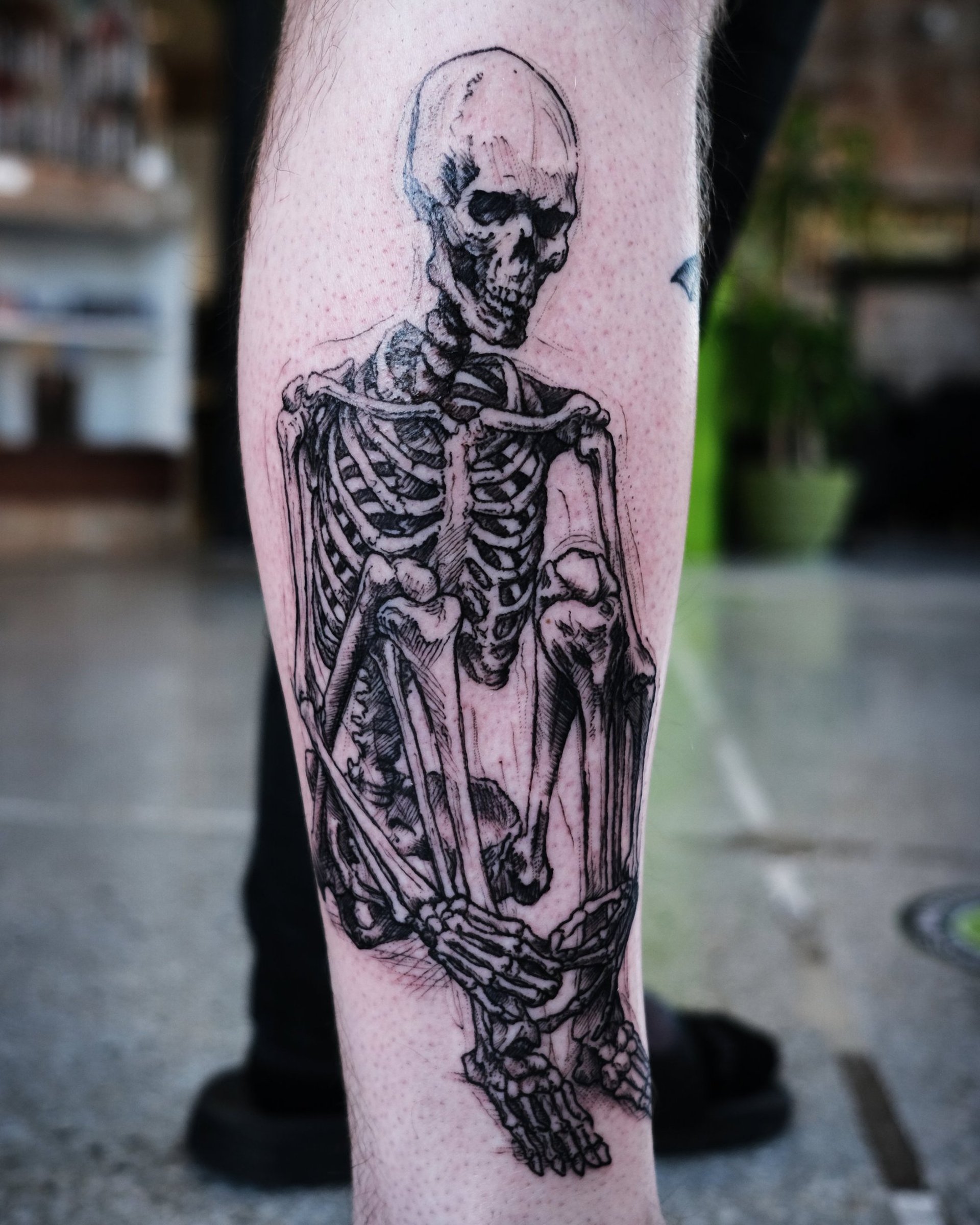
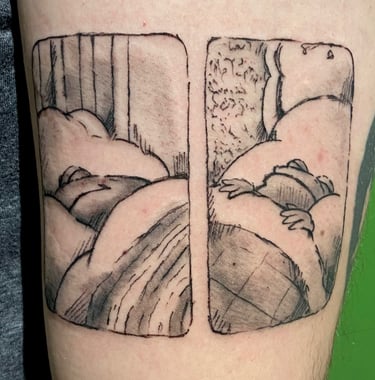
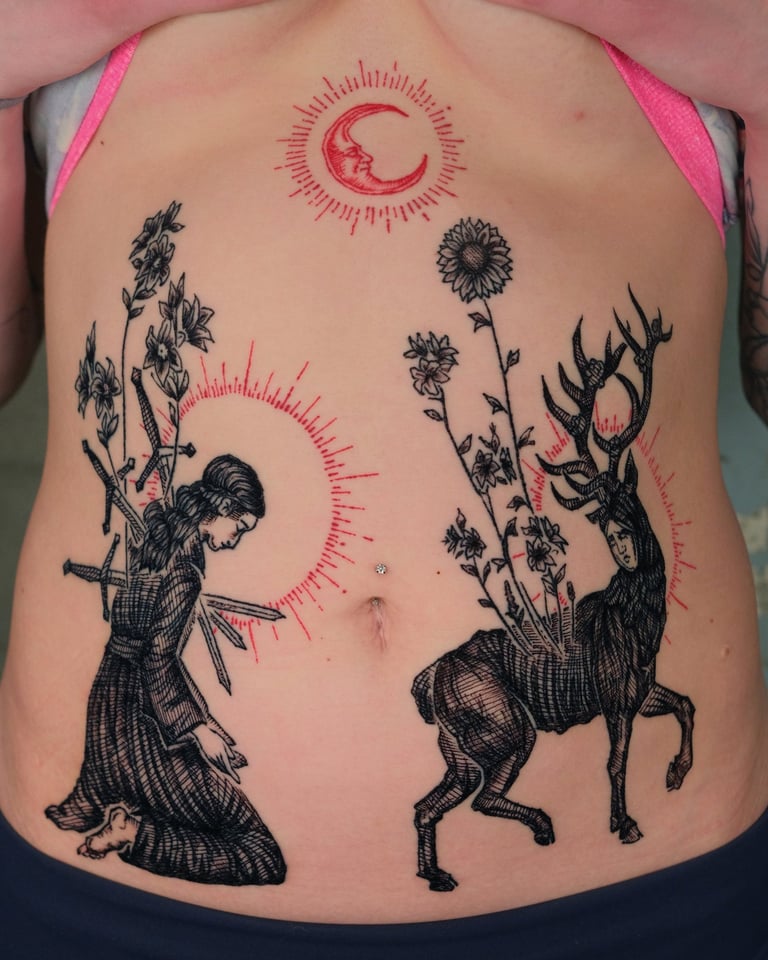
Modern tattoo styles often use smooth gradients or color for shading, blending from dark to light in a continuous wash, almost like airbrushing. Engraving style is a little different. The shading is usually built from lines: parallel lines (hatching), crossed lines (cross-hatching), dots (stippling), or a combination. Each line is intentional. The "shading" is actually thousands of small decisions about line weight, spacing, and flow direction.
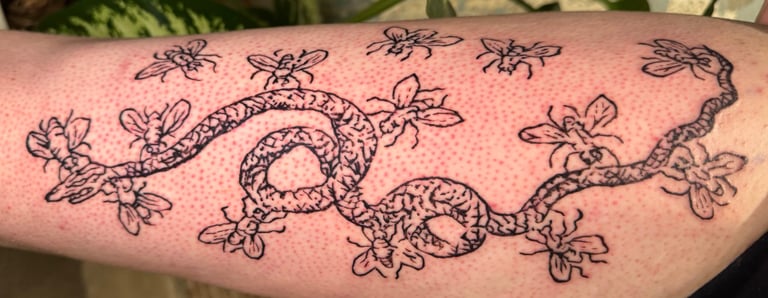
Dot shading (stippling) is another technique. It creates a different texture, almost like a grainy photograph. Some pieces call for it, especially when you want a grainy transition or a dusty, aged feel that line shading alone doesn't quite give you.
Common characteristics of engraving style tattoos:
- Medium to thick line-weight to make certain elements stand out
- fine line inner detailing
- Cross-hatching, line shading, and dot shading
- A hand-drawn, slightly imperfect quality, like a print from a hand-carved block
- Often black and grey, though selective color (often red) can add a striking accent
- Subject matter that leans into the historical roots: medieval imagery, botanical illustrations, animals, occult and cosmic themes, dark fantasy, anatomical studies
- A feeling of being "from another era," like the tattoo could have existed as a print 400 years ago
The spectrum: from rough and sketchy to highly refined
Eengraving style isn't just one look. There's a range, from raw and primitive to polished and precise. I work across this entire spectrum, and where a piece lands depends on what fits the concept and what the client is drawn to.
-Rough and weathered. This is the look of early medieval woodcuts, the kind of work you'd find in books by artists like Claude Paradin. Broken lines, crude figures, heavy wear. The artwork looks almost primitive, like it was carved quickly into rough wood and printed on bad paper. I love the raw energy of it. There's a beauty in the imperfection, and it translates into tattoos that have real character and a sense of age.
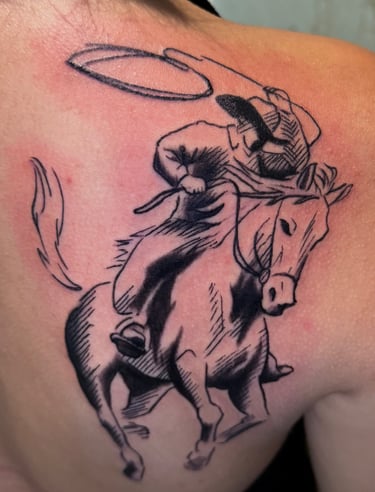
-Loose and sketchy. Closely related to the engraving look, but with even more loose visible energy in the line work. Sketchy tattoos feel like they were drawn quickly and confidently, with lines that trail off or overlap, like a page from an artist's sketchbook. I love doing these because there's a looseness to the process that's really enjoyable, and the results have a life and motion to them that overly precise work sometimes lacks.
-Detailed and refined. This is the Dürer end of the spectrum. Precise cross-hatching, careful line weights, intricate detail. Think Renaissance-level engravings, Victorian botanical prints, the kind of illustration work that makes you lean in close to see how it was done. These pieces take more time but the results are stunning.
Why I work in this style
Some of my first artist tools I used as a little kid were my dad's technical Rapidograph pens, fine tip artist pens that you refill with ink. I'd doodle with them all the time.
My mom bought me my own set at Dick Blick art store when I was in middle school, and I was obsessed.
I've been steering my tattoo work in this direction for 10+ years, before I even knew what to call it. After decades of tattooing across many styles, this is what I keep coming back to. A few reasons:
It's what I genuinely enjoy doing. That matters more than it might sound. When I'm working in a style I love, I'm more focused, more patient, more willing to spend the extra time getting the details right. That translates directly into a better tattoo for you.
Black ink is a dream to work with. This is the kind of thing only another tattooist would understand, but black tattoo ink is water-thin. It glides over the skin, it's easy to see what you're doing, and it wipes clean instantly. It saves so much paper towel. Color ink is thick and opaque, and I find myself constantly trying to clean ink and blood to see what I"m doing. I rarely see much blood with my current style.
Line shading holds up well over time. Realistic shading and color can look amazing when it's fresh, but for me, I find it's more prone to fading unevenly and losing definition as the tattoo ages. Line shading, the hatching and cross-hatching that define the engraving style, maintains its structure over the years. The lines may soften and spread, but it leans into that vibe. I rarely need to do touchups on work in this style, which tells me the technique is sound.
Learn more about how tattoos age →
The imperfection is a feature. I like tattoos that feel handmade. A slight wobble in a line, the organic variation of hand-drawn cross-hatching, these things give the work character. It's the same quality that makes an original woodcut print more interesting than a digital reproduction. I lean into that rather than trying to make everything look machine-perfect. But in some instances, you want more perfect lines!
Skin is an imperfect medium, and that's okay. Even when tattoos are executed perfectly, imperfections can show through over time. Skin is a living, three-dimensional surface with its own texture, elasticity, and movement. It's not flat paper. Ink sits differently depending on the area and skin type. The organic quality of engraving-style linework actually works great for tattoos.
The style is relatively quick to tattoo, and damages less surface area. This is the part that's really great for my clients. I can move pretty quickly through the tattoo, and it usually doesn't require me to go back through the tattoo multiple times to add layers of color or washes. A medium sized realism tattoo can take me 6 hours. The same sized engraving tattoo might take me 2-3 hours.
Its a vibe!
Source material and the design process
One of the things I love about this style is that I get to work with centuries of incredible source material. Medieval woodcuts, Renaissance engravings, Victorian botanical illustrations, vintage scientific diagrams, antique book plates. There's an endless library of imagery out there that was never meant to be a tattoo, and a big part of what I do is make it work as one.
If you've ever found a weird old illustration in a book or online and thought "that would make an amazing tattoo," you're probably right, and I'd love to do it. Clients bring me historical images all the time, and I'll either tattoo them as they are or adapt them to fit the body and work better in skin. I honestly love these projects. Working from existing historical artwork is efficient, it respects the original craft, and the results often have a quality that's hard to achieve any other way.
I also draw from scratch when the project calls for it, using the visual language of engraving to create something new that feels like it could have existed centuries ago.
Another Detroit artist worth mentioning is Micah Ulrich, who creates incredible original artwork in this style. They're not a tattoo artist, but their illustrations are hugely popular as tattoo references. Micah sells very affordable tattoo flash licenses, so you can support the original artist while getting the design tattooed. I've done a number of their pieces and always recommend clients purchase the license first. If you're a fan of Micah's work and want it tattooed by someone who specializes in this style, I'm your guy.
Find Micah here →

Love the look of old books, antique prints, and historical illustration
Are drawn to medieval, gothic, botanical, storybook, occult, or dark fantasy imagery
Prefer black and grey or limited color
Appreciate craftsmanship and detail
Want a tattoo that feels timeless
Want a relatively speedy and easy tattoo that doesn't create a lot of damage to skin
Want an artist that is easy-going, experienced, professional, clean, patient, and caring
If any of that resonates, take a look at my gallery and see if the work speaks to you. If you've been looking for an artist who specializes in this, who's been developing this style for years and not just picking it up because it's trending, I'd love to talk about your project.
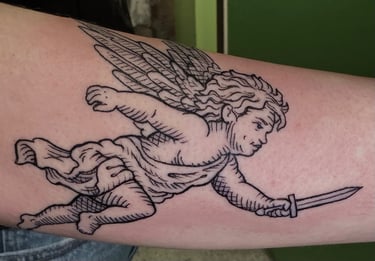
Sometimes I will apply a light grey wash underneath line shading to add a little more depth and dimension without competing with the lines themselves. It gives the piece a richness that reads well from a distance while still having all the fine detail up close. This almost has the look of watercolor washes in an illustration. This gives the work texture and depth .